Can you spot the recording light on Meta Ray-Ban glasses?
A practical owner's guide to the small capture indicator, what it signals, and why a light is not the same as consent.
The short answer
Ray-Ban Meta glasses look much like ordinary eyewear, but they include a camera and a small front-facing capture light. Ray-Ban says the light is intended to let people know when a photo or video is being taken. Meta describes the same purpose in its current product guidance.
That is an important feature. But is it a clear enough signal to those around you?
It might not be against the law to film in public, but that doesn’t mean other people will like it.
What to look for
The front-facing capture LED is the small light on the outside of the frame. It is different from the inward-facing notification light that the wearer can see.
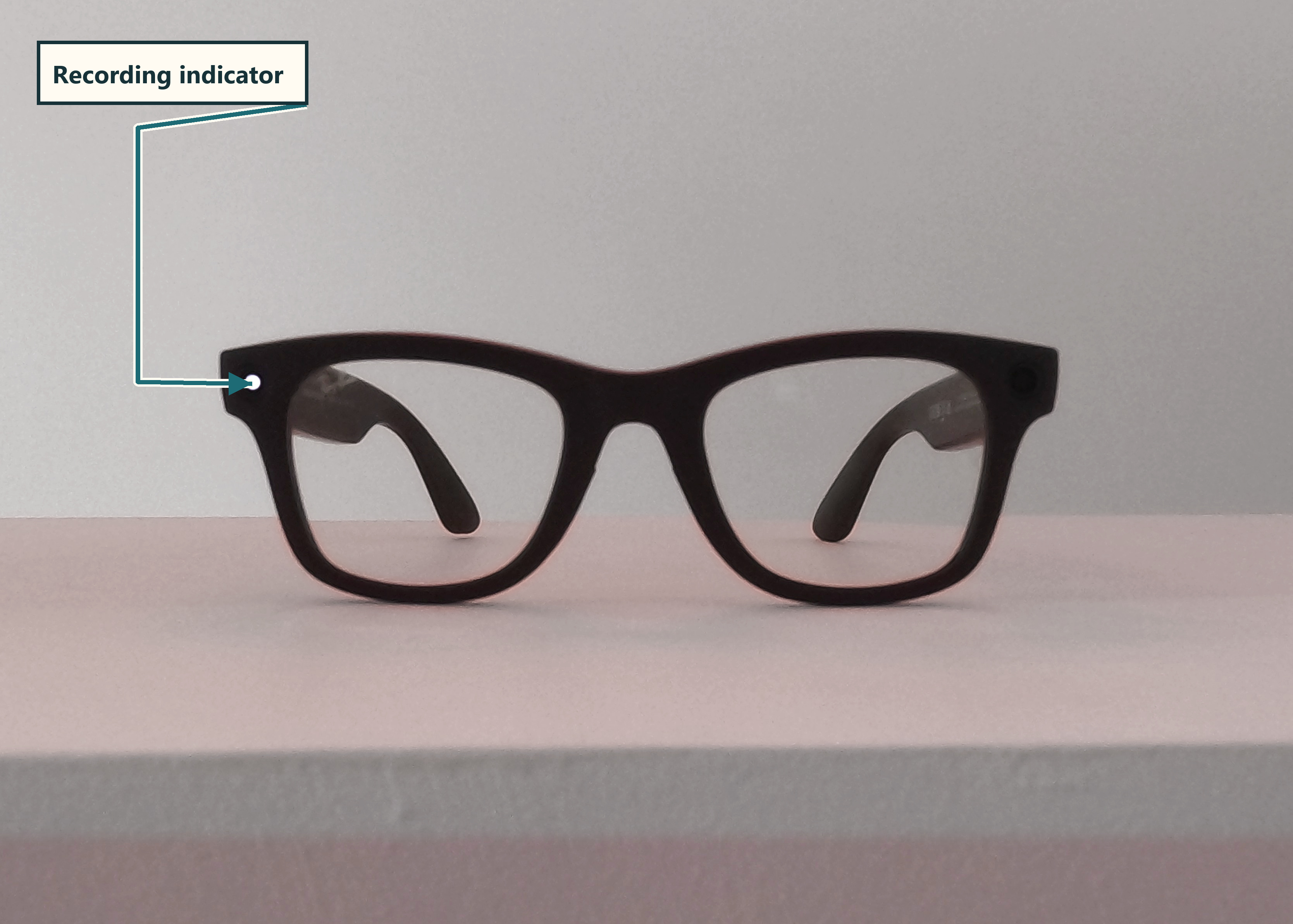
What the light can tell you
It can indicate that the glasses are carrying out a capture-related function. That is why Meta says the light exists: people nearby should have a visible signal rather than having to guess from the wearer’s hands or phone.
What the light cannot tell you
The light does not tell you where a file will go, who might see it, whether audio is involved, whether an AI feature will process it, or whether everyone in the scene has agreed to be recorded.
It also does not tell you whether the use is appropriate in a workplace, classroom, health setting, private conversation or other location with its own rules.
A simple etiquette test
Before recording:
- Tell people what the glasses can do.
- Ask before recording when another person will be identifiable.
- Follow school, workplace, venue and service rules.
- Avoid capturing private conversations or sensitive information unless there is a clear, lawful reason.
- Stop if someone asks you to stop.
- Do not share a recording simply because the device made it easy.
eSafety describes consent as informed, freely given and reversible. That is a useful standard for ordinary family and community situations even where the legal position depends on the state, territory and circumstances.
Rosie’s privacy check
Ask together:
- Would I take out my phone and record in this setting?
- Does the person know what is happening?
- What could the camera and microphones capture beyond the intended subject?
- Where will the recording be stored and who could receive it?
- What will I do if someone changes their mind?
The point is not to make smart glasses impossible to use. It is to keep the person being recorded in the loop.
If something feels wrong
Write down what you directly observed: date, place, device, visible indicator, what was said, and what happened next. Avoid confronting someone, sharing footage publicly or collecting more sensitive material than necessary.
If the concern involves immediate danger, contact emergency services. For an ordinary platform, business or privacy concern, BARK can help you prepare a factual record and identify a proportionate official route. Nothing is sent to Puppy vs Algorithms.
Evidence Trail
What this article is based on
Ray-Ban. Ray-Ban Meta FAQs. Product guidance checked 25 July 2026
Describes the front-facing capture indicator and the product's recording guidance.
Meta. Meta's AI Glasses: Your Questions Answered. July 2026 product guidance; checked 25 July 2026
Provides the manufacturer's current explanation of AI-glasses features and recording indicators.
eSafety Commissioner. Consent for sharing photos and videos. Checked 25 July 2026
Provides practical guidance on informed, freely given and reversible consent.
Western Australian Government. Surveillance Devices Act 1998. Current legislation checked 25 July 2026
Illustrates that recording law is state-specific and context-dependent.